
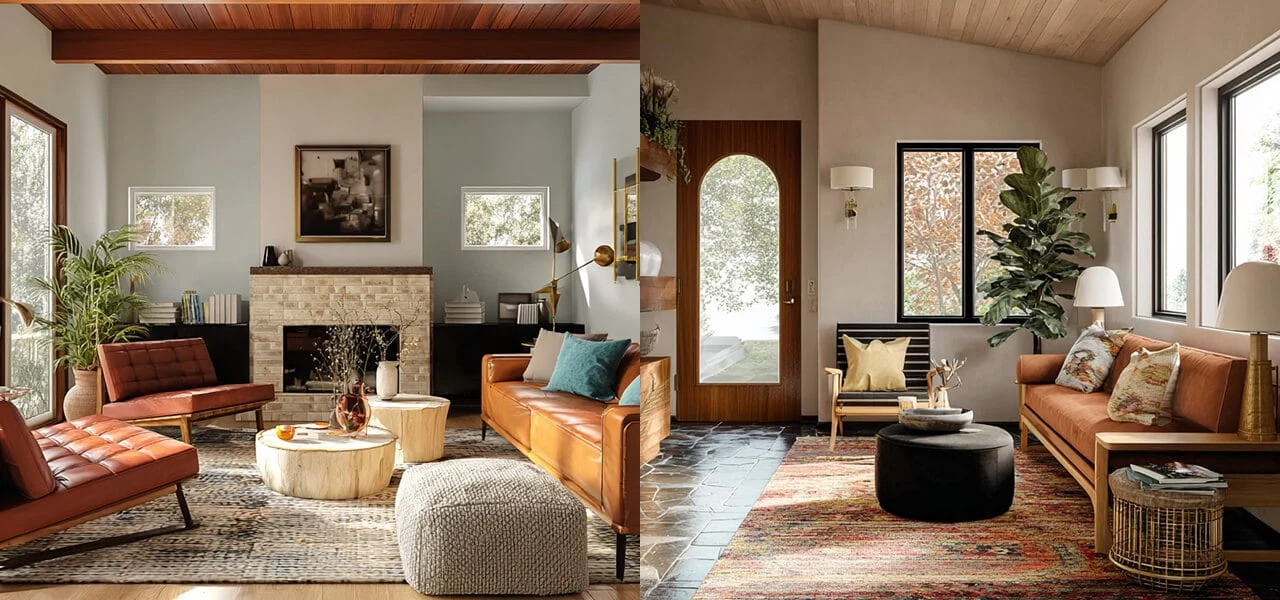

Interior design trends often move in cycles, borrowing elements from bygone decades before shifting toward new aesthetics. Yet, some movements manage to break free from this temporary loop and become permanent fixtures in our living spaces. Mid-century modern design, along with the broader passion for vintage furnishings, has not merely returned to the spotlight; it has firmly embedded itself as a cornerstone of modern residential decor.
Walk into a downtown loft, a suburban family house, or a curated boutique hotel, and you will likely see organic wood contours, tapered peg legs, low-profile silhouettes, and warm earth tones. Rather than fading away as a short-lived fad, mid-century modern furniture continues to captivate homeowners, interior designers, and collectors across generations. This enduring appeal stems from a blend of exceptional design principles, reaction against disposable mass-produced goods, cultural nostalgia, and a growing commitment to environmental sustainability.
Defining the Mid-Century Modern Movement
To understand why this furniture style resonates so strongly today, it helps to examine its historical origins. The mid-century modern movement roughly spanned the period from the mid-1940s through the late 1960s, emerging in the years directly following the Second World War.
As urban populations expanded and suburban developments sprang up rapidly, residential architecture evolved. Homes were designed with open-concept floor plans, sliding glass doors, and larger picture windows, all aimed at bringing the outdoors inside. These airy, functional structures needed a radically different style of furniture to match. Heavy, dark, highly ornamental Victorian and traditional pieces suddenly looked entirely out of place in modern open layouts.
Pioneering designers such as Charles and Ray Eames, Eero Saarinen, George Nelson, Arne Jacobsen, and Hans Wegner began reimagining household furnishings from the ground up. Influenced by the German Bauhaus school and Scandinavian functionalism, these designers prioritized practicality, clean lines, and human-centered ergonomics. They embraced newly developed industrial materials and manufacturing methods, experimenting with molded plywood, fiberglass, tubular steel, aluminum, and cast resin alongside traditional warm hardwoods like teak, rosewood, and walnut.
The core philosophy of this era was straightforward: form follows function, and high-quality design should be accessible, practical, and visually light. Decades later, these same design qualities address the spatial challenges and aesthetic preferences of contemporary households.
Why Vintage and Mid-Century Modern Resonates Today
The modern revival of vintage mid-century furniture is not an accident. It is driven by distinct cultural shifts, aesthetic values, and consumer behaviors that set it apart from typical trend-chasing.
-
Timeless Geometric Simplicity: Mid-century pieces avoid unnecessary ornamentation and fussy decorative carvings. The emphasis rests squarely on sculptural silhouettes, clean edges, and gentle organic curves. Because these pieces are fundamentally simple, they integrate seamlessly into a wide variety of interiors, from industrial lofts to contemporary farmhouses.
-
Proportions Suited to Modern Spaces: Urban apartments and contemporary houses often contend with modest square footage. Mid-century modern furniture was intentionally developed for the smaller suburban tract homes and apartments of the post-war building boom. With its low profiles and elevated tapered legs that expose floor space beneath, the furniture helps rooms feel open, airy, and uncluttered.
-
Tactile Connection to Natural Materials: In an increasingly digital world dominated by plastic electronics and touchscreens, people crave organic textures in their homes. Mid-century furniture celebrates the natural grain of woods like walnut, oak, and teak, complemented by genuine leather, wool bouclé, and woven linen upholstery.
-
Rejection of Fast Furniture: The modern consumer landscape is saturated with flat-pack, mass-manufactured furniture made from particleboard, toxic glues, and thin paper laminates. These items frequently break down within a few years and end up in municipal landfills. Vintage furniture offers an alternative built from solid hardwood, structural veneers, and time-tested joinery techniques.
-
A Quest for Individuality: Modern big-box stores have led to homogenized interiors where different living rooms look like mirror images of the same catalog page. Sourcing authentic vintage mid-century pieces allows homeowners to create unique spaces that reflect personal taste, patience, and curation rather than mass consumption.
Key Characteristics of Mid-Century Design
Recognizing authentic mid-century modern design involves spotting a collection of signature structural details and aesthetic treatments:
-
Tapered and Hairpin Legs: Rather than heavy, blocky bases that sit flush against flooring, mid-century seating and credenzas are lifted off the ground on slender splayed legs, dowel posts, or minimalist hairpin steel rods.
-
Organic and Biomorphic Forms: Designers moved away from rigid right angles in favor of fluid, kidney-shaped tabletops, womb-like lounge chairs, and curving molded backrests that mirror the curves of the human body.
-
Contrasting Textures and Materials: Mid-century designers loved pairing distinct materials within a single piece. You frequently see brass caps on timber furniture legs, woven cane door panels set inside solid walnut sideboards, and cast-iron frames supporting molded leather seats.
-
Bold Yet Grounded Color Accents: While natural wood tones form the visual foundation of mid-century interiors, the palette regularly embraces rich, retro accent hues such as mustard yellow, avocado green, burnt orange, petrol blue, and charcoal.
The Sustainability Factor: Eco-Friendly Decorating
Beyond aesthetics, environmental considerations play a massive role in the return of vintage furnishings. Modern consumers are increasingly aware of the ecological footprint associated with their purchasing choices, and furniture manufacturing is a major driver of global timber harvesting and industrial emissions.
Opting for authentic vintage mid-century modern furniture is an inherently circular choice. By purchasing a sideboard, dining table, or lounge chair crafted fifty or sixty years ago, you bypass the demand for virgin timber, prevent manufacturing pollutants, and reduce shipping emissions tied to overseas freight.
Furthermore, vintage pieces preserve historic craftsmanship. A solid teak Danish credenza made in 1962 was constructed with traditional mortise-and-tenon or dovetail joints designed to last across lifetimes. If the surface becomes scratched or faded, the hardwood can be stripped, sanded, and re-oiled to restore its original luster. Investing in vintage means choosing items that hold functional and financial value over decades, rather than buying items engineered for planned obsolescence.
Blending Vintage Mid-Century with Contemporary Decor
A common pitfall when embracing mid-century modern furniture is overdoing it to the point where a living room resembles a television set from the early 1960s. The most successful modern interiors avoid this time-capsule trap by using vintage pieces as statement accents within an eclectic, layered environment.
Start by choosing one or two focal points per room. A sculptural vintage walnut credenza serves as an exceptional anchor in an otherwise minimalist living room, grounding a modern flat-screen television while concealing media components and wiring. Pair a mid-century tulip dining table with contemporary upholstered dining chairs, or position a vintage leather reading chair alongside a streamlined modern sofa.
Balance warm retro woods with contemporary textures. Juxtapose rich oiled teak against cool natural materials like polished concrete, honed marble, textured plaster walls, and woven jute rugs. Mixing historical eras creates depth, visual tension, and an authentic lived-in feeling that single-era decorating cannot achieve.
Frequently Asked Questions
What is the difference between authentic vintage mid-century furniture and mid-century modern reproductions?
Authentic vintage mid-century furniture was manufactured during the original era, roughly between 1945 and 1969, featuring period-correct materials, aged patinas, maker marks, and traditional joinery. Reproductions are modern pieces built recently that copy or draw stylistic inspiration from those original designs, often using updated manufacturing techniques or different grades of wood composites and hardware.
How can I spot an authentic vintage mid-century piece while thrifting or antiquing?
Look beneath table surfaces, inside drawer boxes, and along the back panels of cabinets for manufacturer stamps, burned wood markings, metal inventory badges, or paper labels from notable makers or regions like Denmark, Sweden, or Yugoslavia. Check the construction details; authentic pieces will feature solid wood edges, quality matching veneers, dovetail drawer joinery, and heavy, well-machined metal hardware rather than cheap fasteners or staples.
Which wood species are most commonly associated with mid-century modern furniture?
Teak, walnut, and rosewood were the dominant woods used during the mid-century era, particularly by Scandinavian and American furniture companies. Designers also made frequent use of white oak, birch, and beech, particularly in lighter finishes or when bent into molded plywood frameworks.
How should I care for and maintain original vintage mid-century wood finishes?
Avoid harsh modern chemical sprays, silicone-based polishes, and abrasive cleaners, which leave sticky residues that damage vintage varnishes and oils. Clean surfaces with a lightly damp microfiber cloth, followed immediately by a dry towel. For oiled finishes like Danish teak, apply a high-grade natural mineral or Danish oil once or twice a year to replenish the wood fibers and protect against drying and cracking.
Why is original mid-century modern furniture often so expensive?
Original pieces carry historical value, rare craftsmanship, and collectibility. Many of these items were produced in limited quantities by master craftsmen using premium solid hardwoods and early cutting-edge fabrication methods that are expensive to replicate today. As time passes, the surviving supply of intact, pristine vintage pieces shrinks, driving up market demand among serious collectors and design enthusiasts.
Can mid-century modern furniture hold up to daily use in a household with kids and pets?
Yes, high-quality vintage furniture is remarkably durable because it was built using solid wood framing and resilient joinery. However, daily protection is wise. Use coasters, place protective felt pads beneath pottery or decorative lamps, and wipe up liquid spills immediately to protect vintage veneers. For upholstered pieces, recovering vintage frames in modern stain-resistant performance fabrics provides the classic aesthetic with kid-friendly durability.
Does refinishing a vintage mid-century piece ruin its resale value?
Careful, professional restoration that preserves the integrity of the piece generally does not harm value, especially for common consumer-grade items that suffer from severe water rings or finish loss. However, heavily sanding down rare, museum-grade designer pieces, altering their structural profile, or painting over beautiful natural wood grain with opaque paint will substantially diminish their historical integrity and market resale worth.

Comments are closed.