
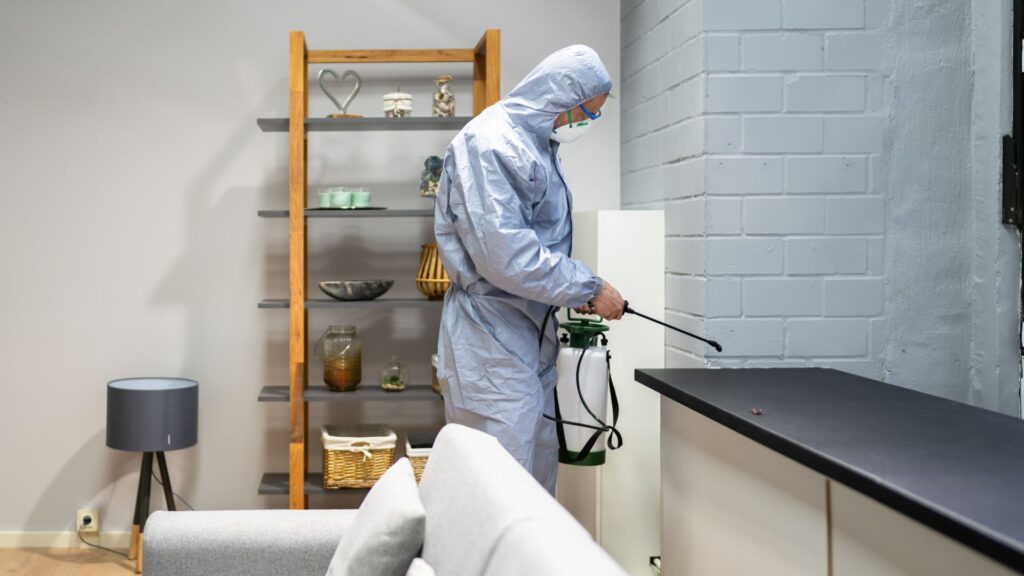

Most homeowners recognize that unsealed food, dirty dishes, and open trash bins invite pests. While a steady food supply certainly draws uninvited visitors, water is an even more potent catalyst for an infestation. In fact, many pests can survive for weeks or even months without a meal, but few can survive more than a handful of days without moisture.
Water intrusion, high indoor humidity, plumbing leaks, and poor ventilation turn an otherwise secure house into an ideal habitat for pests. When excess dampness settles into foundations, crawl spaces, attics, or wall cavities, it initiates a destructive chain reaction. Understanding the physiological and ecological connection between moisture and pest behavior is the most dependable way to secure your home against structural damage and contamination.
The Biological Need for Moisture in Common Pests
Insects, arachnids, and rodents rely on moisture for basic survival, reproduction, and environmental stabilization. Their small physical size makes them especially vulnerable to dehydration, meaning their movements and nesting habits are driven by the pursuit of damp microclimates.
-
High surface-area-to-volume ratio: Insects lose internal moisture rapidly through their cuticles and respiratory spiracles. Without humid surrounding air or direct drinking sources, small pests desiccate and perish within hours.
-
Softening nesting substrates: Wood-boring insects cannot easily penetrate dry, seasoned lumber. Persistent moisture softens timber fibers and invites fungal rot, creating soft cellulose that pests can excavate and chew effortlessly.
-
Egg and larval survival: The reproductive cycles of mosquitoes, drain flies, silverfish, and cockroaches rely on humid conditions. Without sufficient moisture, delicate insect eggs dry out and collapse before hatching.
-
Secondary food cultivation: Damp environments foster mold, mildew, algae, and bacterial biofilms. For several nuisance pests, these fungal spores and micro-growths serve as primary food sources.
Destructive Moisture-Loving Pests
Excess moisture inside a home attracts a broad range of pests, each exploiting wet conditions in distinct ways.
Subterranean Termites
Subterranean termites require continuous moisture to survive. Because their soft, pale bodies lose moisture rapidly when exposed to dry air, they live underground or within damp building components. When plumbing leaks saturate subflooring, or when gutters spill water directly against concrete foundations, subterranean termites build exploratory mud tubes up the footings. Once inside water-damaged wall framing, they consume structural members from the inside out, often remaining undetected until drywall sags or baseboards cave in.
Carpenter Ants
Unlike termites, carpenter ants do not digest wood for sustenance. Instead, they chew through framing to create smooth, hollow galleries for their brood. Carpenter ants rarely target dry, healthy lumber because the dense grain resists their mandibles. However, when roof flashing leaks or bathroom pipes weep, framing lumber absorbs water and begins to rot. Carpenter ants zero in on these softened timbers, hollowing out structural studs, window headers, and floor joists.
Cockroaches
German, Oriental, and American cockroaches are notoriously water-dependent. Oriental cockroaches are commonly referred to as water bugs because they congregate in damp basements, floor drains, and sump pits. German cockroaches, the most common indoor pest species, thrive in kitchens and bathrooms where leaky sink traps, sweating copper pipes, and refrigerator drip pans provide steady hydration. A cockroach can survive up to a month without food, but deprivation of water will kill it within seven to ten days.
Silverfish and Booklice
Silverfish and booklice, also known as psocids, serve as direct biological indicators of high humidity. Silverfish lack a waxy coating on their outer bodies, which forces them to live in environments with relative humidity levels above 70 percent to prevent fatal dehydration. They thrive in damp basements, moist laundry rooms, and wet crawl spaces, where they graze on wallpaper paste, book bindings, cardboard boxes, and starchy residues. Booklice feed directly on microscopic mold spores growing along damp drywall and unvented attics.
Drain Flies and Phorid Flies
Standing water inside plumbing traps, air conditioner drip pans, and floor drains accumulates an oily sludge of decomposing hair, soap scum, and organic matter. Drain flies and phorid flies deposit hundreds of eggs into this wet gelatinous layer. The larvae feed on the moist biofilm, pupate, and emerge into living quarters as persistent swarms of tiny, moth-like flies.
Rodents
Mice and rats need regular water intake to maintain their metabolism, especially Norway rats, which require up to an ounce of water every day to digest their food. Leaking spigots, pooling condensate near heating and cooling units, and standing crawl space puddles provide reliable watering holes. Rodents also use wet insulation to build nests, chewing damp fiberglass and cellulose into compact beds for their litters.
Critical Moisture Danger Zones in the Home
A property rarely develops moisture problems overnight. Instead, small oversights and slow leaks create moist pockets throughout the home.
-
Basements and unencapsulated crawl spaces: Bare earth floors release gallons of water vapor into the air through evaporation. This damp air rises naturally through subflooring into the living space via the stack effect, carrying musty odors and pests upward.
-
Under-sink cabinets and pipe penetrations: Hidden supply line drips, failing P-traps, and loose disposal connections create dark, swampy conditions beneath kitchen and bathroom cabinetry.
-
Attics with poor ridge or soffit ventilation: Warm, moist air escaping from showers and cooktops rises into the attic. In winter, this moisture condenses on cold roof sheathing, generating mildew and rot that draws pests into the attic.
-
Foundation perimeters with negative slope: When ground soil slopes toward the house, rainwater drains against exterior walls, seeping through masonry pores and soaking sill plates.
-
Blocked roof gutters and downspouts: Clogged gutters spill excess rainwater down exterior siding, soaking fascia boards, rotting soffits, and inviting carpenter ants, squirrels, and wasps to build nests in the soft wood.
Practical Steps to Control Moisture and Prevent Pests
Eradicating an insect or rodent infestation requires more than applying insecticides or setting mechanical traps. If you eliminate the pests without fixing the underlying water issue, new populations will quickly take their place.
-
Fix indoor plumbing defects immediately: Inspect all shutoff valves, supply hoses, drainpipes, and exterior hose bibbs. Replace worn gaskets, tighten loose compression fittings, and insulate cold water pipes to prevent heavy condensation during humid summer months.
-
Regulate indoor relative humidity: Maintain indoor humidity levels between 30 and 50 percent using central air conditioning and heavy-duty, energy-efficient dehumidifiers in basements and crawl spaces.
-
Seal crawl spaces with heavy vapor barriers: Cover unpaved crawl space ground with a commercial-grade vapor barrier of at least 10 to 12 mil thickness, overlapping seams and taping edges up the foundation walls to block rising ground moisture.
-
Run mechanical exhaust fans: Operate exhaust fans during every shower and keep them running for at least twenty minutes afterward to evacuate lingering steam. Ensure dryer vents exhaust completely outdoors rather than venting inside attics or crawl areas.
-
Redirect exterior surface runoff: Clean gutters every autumn and spring to prevent overflows. Install downspout extensions that discharge roof runoff at least six to ten feet away from foundation walls.
-
Regrade foundation perimeters: Maintain a minimum drop of six inches over the first ten feet away from the foundation perimeter to ensure rainwater flows away from structural slabs and basement walls.
Frequently Asked Questions
Can running a dehumidifier alone get rid of an existing pest infestation?
No, a dehumidifier alone will not eliminate an established infestation. While lowering relative humidity below 50 percent stops silverfish and booklice from reproducing and drives water-dependent pests to look elsewhere, it will not kill hidden nests of roaches, ants, or termites. Dehumidification must be paired with mechanical traps, targeted baiting, and structural repairs.
How quickly does moisture damage attract pests to newly built homes?
Wood-boring pests and moisture-loving insects can find damp construction materials in as little as two to three weeks. If new framing timbers get soaked during construction and are closed inside walls before drying thoroughly, trapped moisture can breed mold, drawing booklice and fungus gnats long before owners move in.
Why do centipedes and millipedes suddenly appear on basement floors?
Centipedes and millipedes have poor moisture-retention biology and need damp habitats to survive. Millipedes consume decaying plant matter and move inside when exterior soil dries out or becomes waterlogged. Centipedes are predators that follow other moisture-loving prey, such as silverfish, spiders, and roach nymphs, directly into humid basements.
Does mulch around the foundation worsen moisture-related pest problems?
Yes. Wood mulch holds substantial moisture directly against foundation walls, creating a cool, damp habitat for termites, carpenter ants, earwigs, and rodents. Keep organic mulch at least twelve inches away from the home foundation, or replace it with dry pea gravel or crushed stone barriers.
Can water damage inside ceilings attract pests even on upper floors?
Yes. Roof leaks or leaking bathroom pipes on upper floors wet ceiling drywall and joists, softening framing members and releasing high humidity into attic cavities. Pests such as carpenter ants, silverfish, and rodents can climb through interior wall cavities to nest inside these damp ceiling recesses.
How do I know if my crawl space has a moisture problem before pests appear?
Common indicators include persistent musty odors drifting into first-floor living rooms, peeling paint along lower baseboards, rusting metal ductwork, sagging insulation between floor joists, and visible efflorescence, which looks like white, powdery mineral deposits along interior concrete foundation walls.
Do air conditioning condensation lines cause pest issues outside the home?
Yes. When air conditioning condensate drain lines discharge directly next to the foundation wall, they produce constant puddles during hot summer months. This persistent water source attracts thirsty rodents, subterranean termites, and foraging ant colonies, which use the water pool as a staging ground to enter the home.

Comments are closed.